.png)

Dreaming of a journey where adventure meets wildlife?
Cabo Verde, an extraordinary volcanic archipelago in the Atlantic, is a haven for nature lovers. Pristine beaches, dramatic cliffs, and thriving biodiversity make these islands one of the top marine and coastal hotspots in the world. From nesting sea turtles to rare seabirds,
Cabo Verde’s wildlife tells a story of resilience.
Explore consciously
Visiting Cabo Verde’s wild areas means entering a living ecosystem that depends on our care. Stay on marked paths, keep a safe distance from wildlife and nesting sites, and avoid disturbing plants or animals. These small acts help preserve the habitats that make the islands special.

Important habitats for wildlife
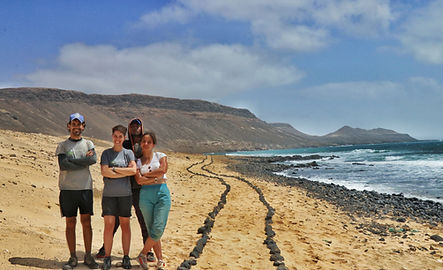
The archipelago Cabo Verde lies approximately 570 km west of continental Africa. Its isolation and volcanic origins created a network of ten volcanic islands and thirteen islets with diverse habitats that support numerous endemic and rare species.
At the same time, beneath the surface, its rare submarine geomorphology shapes a network of ridges, valleys, and plateaus that drive nutrient circulation and marine productivity. This intricate seascape is what makes Cabo Verde a crown jewel. It becomes a vital migration corridor for birds and marine megafauna, and a refuge for endemic species. Much of the marine environment remains unexplored, yet what is known already reveals extraordinary biodiversity. Among its most iconic residents are the loggerhead sea turtles, whose vast nesting colonies highlight the archipelago’s global ecological importance.
The islands have attracted scientific interest since Charles Darwin documented Santiago’s geology and ecology aboard the HMS Beagle in Santiago Island. Today, Cabo Verde remains a natural laboratory for studying oceanography, island ecosystems, and climate change.
Cabo Verde’s sea turtles
Cabo Verde is home to the world's largest nesting populations of loggerhead turtles (Caretta caretta). During nesting season, females return to the beaches where they were born and lay their eggs in warm sand that provides natural incubation. Sal, Boa Vista and Maio are key nesting islands, with activities taking place mostly between June and October.
_edited_edited_edited_edited.jpg)

Although loggerheads are the most common species, other sea turtle species found in Cabo Verde’s ocean include Green turtle (Chelonia mydas), Olive Ridley turtle (Lepidochelys olivacea), Hawksbill turtle (Eretmochelys imbricata) and Leatherback turtle (Dermochelys coriacea). Each has a unique life cycle and history in this country, where some nest occasionally on beaches, while others prefer the archipelago as a feeding ground.
Although resilient, sea turtles face threats such as coastal development, poaching, light pollution, entanglement in fishing gear and much more. Protecting nests and hatchlings is crucial, as only a tiny percentage survive to adulthood. National laws criminalise any disturbance of sea turtles or their nests and outline strict guidelines for their observations.
Sea turtles play a vital role in maintaining the health of the marine ecosystem. By feeding on sponges and controlling other marine populations such as jellyfish, they help coral reefs flourish. Their conservation is thus critical not just for the species itself but for the broader ocean environment.

Seabirds of Cabo Verde
Cabo Verde is home to a rich diversity of seabirds, many of which rely on the islands’ nesting grounds for survival. Its 15 Important Bird Areas (IBAs) provide critical habitats for breeding and resting, supporting both resident and migratory populations.

Endemic species such as the Cabo Verde shearwater (Calonectris edwardsii), Cabo Verde storm-petrel (Hydrobates jabejabe), Cabo Verde petrel (Pterodroma feae) and the endemic subspecies Boyd's shearwater (Puffinus lherminieri boydi), white-faced storm petrel (Pelagodroma marina eadesorum) make the archipelago globally significant for seabird conservation.
The islands are also major nesting grounds for native sea birds such as the iconic red-billed tropicbird (Phaethon aethereus), where he largest recorded colony is found on Sal Island. Other birds, such as brown booby (Sula leucogaster) and petrels, are also resident breeders.
Resident and migratory birds
Each year, thousands of migratory birds stop in Cabo Verde while travelling along the East Atlantic Flyway, a key route between the Arctic, Europe, and Africa. Among the key bird species observed in Cabo Verde related to this flyway are shorebirds and waterbirds, such as:
black-bellied plover (Pluvialis squatarola), Eurasian wigeon (Mareca penelope), common ringed plover (Charadrius hiaticula), bar-tailed godwit (Limosa lapponica), Eurasian spoonbill (Platalea leucorodia), sandpipers, terns, and swallows use the archipelago as a stopover.


Permanent residents have adapted to the islands’ varied habitats, from arid plains to coastal cliffs. These include the Osprey (Pandion haliaetus), Cape Verde purple heron (Ardea bournei), greater hoopoe-lark (Alaemon alaudipes), cream-coloured courser (Cursorius cursor), bar-tailed lark (Ammomanes cinctura), Cape Verde buzzard (Buteo bannermani), grey-headed kingfisher (Halcyon leucocephala), black-winged stilt (Himantopus himantopus), Kentish plover (Charadrius alexandrinus) and many more stilts.
The mix of endemic, resident, and migratory species makes Cabo Verde an exceptional location for bird enthusiasts.
Cabo Verde’s seabirds, resident birds, and migratory species face severe pressures from introduced predators, habitat loss, coastal development and human disturbance. Learn more about the specific threats facing seabird populations here.

Birdwatching tips
-
Use binoculars to enhance your experience
-
Birdlife is most active at sunrise and sunset
-
Hiring a local guide who is familiar with the islands’ birds is recommended for first-time visitors.
-
Maintain a respectful distance and avoid disturbing nests, particularly on cliffs and in protected areas.
-
Stay on marked paths, especially in desert and dune habitats, where many nests are on the ground and camouflage well.
You can be part of our effort to protect Cabo Verde’s birds by supporting our work, volunteering, or raising awareness. Together, we can keep these skies filled with wings.
Sharks and Rays
Cabo Verde is an essential refuge for elasmobranchs, hosting more than sixty species of sharks and rays in the tropical North Atlantic waters, playing a critical ecological role by regulating prey populations and maintaining the balance of marine ecosystems. Seven internationally classified Important Shark and Ray Areas (IRSA) are documented as critical habitats.
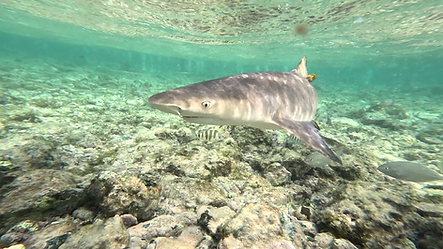
Commonly observed shark and ray species include lemon sharks (Negaprion brevirostris), nurse sharks (Ginglymostoma cirratum), round stingray (Taeniurops grabata), tiger sharks (Galeocerdo cuvier), and several hammerhead species.
Less frequently encountered species include scalloped hammerheads (Sphyrna lewini), Atlantic weasel sharks (Paragaleus pectoralis), whale sharks (Rhincodon typus), Cabo Verde clearnose skate (Rostroraja cervigoni) and oceanic manta rays (Manta birostris), reef manta rays (Manta alfredi).
The archipelago contains important shark nursery areas. Sal Rei Bay on Boa Vista Island has been identified as the first multi-species shark nursery in Atlantic Africa and Parda reef, Sal Island, hosts one of the world’s few lemon shark nurseries. These sites provide juveniles with protection from predators and human impacts, highlighting their importance for elasmobranch reproduction.
Cabo Verde hosts the region's highest proportion of endangered shark species, where fishing is the greatest threat they face, followed by habitat degradation and climate change. Studies indicate that 66% of shark species in the region are threatened with extinction.

Shark and Ray observation tips
-
Choose tour operators with ethical guidelines
-
Never feed or chase marine wildlife
-
Maintain a respectful distance, stay calm, and slow down
-
Enter water only with reef-safe sun protection
You can be part of our effort to protect Cabo Verde’s wildlife by supporting our work, volunteering, or raising awareness.
Cetacean Hotspot
Similarly, Cabo Verde is a key region for marine mammals in the Eastern North Atlantic. The archipelago hosts a wide range of cetaceans, including rough-toothed dolphins (Steno bredanensis), long- and short-finned pilot whales (Globicephala), and Atlantic spotted dolphins (Stenella frontalis), where the most outstanding are the humpback whales (Megaptera novaeangliae).


Some populations are resident, while others migrate seasonally, using coastal bays and offshore seamounts as feeding and breeding grounds. For the North Atlantic Humpback whales, it is one of the only two breeding grounds. They arrive primarily between January and mid-May to breed and give birth. They are spotted around most islands; however, many favour Boa Vista due to its shallow plateau, a safe environment for calves.
Dolphins can often be observed year-round, both from boats and from shorelines. Both whales and dolphins are vulnerable to bycatch, vessel strikes, underwater noise pollution, and habitat degradation. Human-made underwater noise from shipping and industrial activities disrupts echolocation, communication, and navigation, affecting survival.
Historically, cetaceans were heavily hunted in Cabo Verde, particularly during the eighteenth and nineteenth centuries, when American and European whalers targeted humpback whales and other species. Shore-based whaling, particularly on Brava, became a significant industry. Many Cabo Verdean men were recruited onto whaling ships following the establishment of early diaspora communities abroad.
Today, all cetaceans in Cabo Verde are protected under the Convention on International Trade in Endangered Species (CITES). Recent national legislation, including Portaria Nr.16/2024, regulates cetacean observation to minimise disturbance.


Whale and dolphin observations:
-
Keep a safe distance, minimum 80m, allowing them to control the interaction
-
Reduce noise, don’t touch, swim or feed them
-
Never chase, encircle, or separate individuals from a group
-
Report any injured, entangled or stranded animals
You can be part of our effort to protect Cabo Verde’s wildlife by supporting our work, volunteering, or raising awareness.
Coral Reefs in Cabo Verde
Cabo Verde’s coral reefs, comprising fringing reefs, patch reefs, and barrier reefs, are critical habitats for marine biodiversity. The reefs are primarily rocky outcrops with diverse communities of sponges, corals, and calcareous algae. These reefs are adapted to the cooler, nutrient-rich waters influenced by the Canary Current, which limits expansive reef growth but supports complex and diverse coral assemblages.

Cabo Verde hosts various coral species, many of which are endemic and protected, including dense populations of black and gorgonian corals. They are threatened by ocean warming, coral bleaching, pollution, and destructive fishing practices such as bottom trawling. Protecting these reefs is essential to sustaining marine ecosystems, fisheries, and coastal resilience.

Keeping corals safe:
-
Practice responsible snorkelling and diving by maintaining buoyancy
-
Keep a safe distance from coral reefs; avoid standing, touching, or kicking them
-
Use reef-safe sunscreen to prevent chemical damage to corals.
-
Do not collect coral, shells, or marine life from underwater or the beach as souvenirs.
You can be part of our effort to protect Cabo Verde’s wildlife by supporting our work, volunteering, or raising awareness.
Fishlife in Cabo Verde
The archipelago is home to over 550 fish species, including reef-associated, coastal, and pelagic species. Where much of the marine life is still to be discovered. Approximately 10% of reef fish species are endemic, such as the Cabo Verdean damselfish (Similiparma hermani), white seabream (Diplodus sargus lineatus) and Guinean parrotfish (Scarus hoefleri).
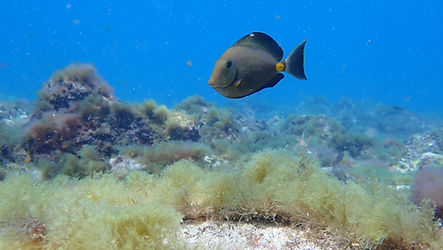

Offshore waters host large pelagic species, including yellowfin tuna (Thunnus albacares), dolphinfish (Coryphaena hippurus), mackerel scad (Decapterus macarellus), and various shark species. Seamounts contribute significantly to marine biodiversity, serving as refuges and critical habitats.
Small-scale fisheries rely heavily on these fish populations, underscoring the need for sustainable management that balances ecological protection with local livelihoods.

Keep our waters plentiful
-
Snorkel or dive responsibly
-
Don’t touch or remove marine life
-
Use reef-safe sun protection
-
Respect local fishing zones, reduce bycatch and stick to size limits and closed seasons
-
Choose certified eco-friendly operators to minimise impact on these vibrant ecosystems.
You can be part of our effort to protect Cabo Verde’s wildlife by supporting our work, volunteering, or raising awareness.
Crustaceans, Molluscs and more
Cabo Verde hosts a diverse crustacean fauna, including around 125 species of brachyuran crabs. Lobster species are ecologically and economically significant, with the most notable being the Cabo Verde spiny lobster (Palinurus charlestoni), and other lobster species include the royal spiny lobster (Panulirus regius) and the brown spiny lobster (Panulirus echinatus). Shrimps and other decapods remain poorly studied, despite their abundance.


Molluscs are also highly diverse and the best-studied animal group, with ten freshwater and forty-one terrestrial species. Marine molluscs include over sixty-four cephalopod species, such as cuttlefish, squid, and octopus, and fifty-three bivalve species, including mussels, cockles, and clams. The genus Conus is exceptionally diverse, with almost fifty endemic species, many of which are on the International Union for Conservation of Nature (IUCN) Red List. Molluscs play critical ecological roles in food webs, nutrient cycling, and habitat structure, underscoring the importance of ongoing research and conservation.
The marine environment in Cabo Verde hosts many other groups and species, such as sea stars, sponges, and others that are an essential part of the ecosystems. Valuing each life protects more than just one species; overexploitation, habitat destruction, and human activities are the main threats, as with every other group.

Enjoying marine life
-
Snorkel, dive responsibly
-
Do not collect coral, shells, or marine life from underwater or the beach as souvenirs
-
Use reef-safe sun protection
-
Consume lobsters only outside the closed seasons
You can be part of our effort to protect Cabo Verde’s wildlife by supporting our work, volunteering, or raising awareness.
Seagrass and Marine Algae
Marine algae in Cabo Verde are exceptionally diverse, with several hundred macroalgal species and a minor but ecologically important seagrass component dominated by a few tropical species. Most species are a mix of West African and Macaronesian native species, with only a handful of endemic algae. Seagrass meadows, particularly Cymodocea nodosa, provide vital habitats for juvenile fish and invertebrates while stabilising sediments.


Recent mapping has identified seagrass meadows in multiple bays around Santiago Island. These habitats contribute to nutrient cycling, carbon sequestration, and overall ecosystem health.
There is still much unknown about algal and seagrass communities. However, it is known that pressures from coastal development, invasive species, and climate change are threatening the marine flora that provides habitat for juvenile marine life.
Terrestrial Biodiversity
Beyond its marine richness, Cabo Verde’s terrestrial ecosystems host an extraordinary array of life uniquely adapted to the islands’ arid and volcanic landscapes. From reptiles confined to single islands, to spiders, insects, and plants found nowhere else on Earth, the archipelago’s biodiversity reflects both isolation and resilience. Yet much of it remains understudied and vulnerable to habitat loss, invasive species, and the impacts of climate change, underscoring the urgent need for ongoing conservation and research.

Among the most distinctive of Cabo Verde’s terrestrial fauna are its reptiles, which exhibit exceptional levels of endemism.

Enjoying terrestrial life
-
Stay on marked trails and paths
-
Avoid disturbing plants and animals
-
Support tours or activities that follow responsible nature guidelines
-
Observing wildlife, keep a gentle distance, and move quietly
-
Do not feed or collect any species
You can be part of our effort to protect Cabo Verde’s wildlife by supporting our work, volunteering, or raising awareness.
Reptiles
The archipelago holds more reptile species and island endemics than other Macaronesian island groups. Cabo Verde hosts approximately twenty-six endemic reptile species and nine subspecies. This includes geckos (of the genera Tarentola and Hemidactylus) and lizards (Chioninia). Some species, such as Bouvier’s leaf-toed gecko (Hemidactylus bouvieri), are critically endangered. They usually occupy rocky outcrops, coastal cliffs, dry shrublands, and dune systems. On islands lacking mammal predators, they act as insect predators and seed dispersers.

Their essential role in Cabo Verde ecosystems is threatened by habitat loss, invasive species such as cats and rodents, invasive reptiles, and other human activities.


Arachnids
Cabo Verde hosts a surprisingly diverse assemblage of arachnids, especially spiders. While many islands are still understudied, it has 223 recorded arachnid species, including 116 spiders and one endemic scorpion (Hottentotta caboverdensis). Many species, including forty-six endemic spiders, appear on the national red list of endangered animals. They are often adapted to arid shrubland, dunes, and coastal habitats, and are focused on ground and foliage hunting and weavers. Some are even adapted to higher saline environments. Many of them are not dangerous to humans, while some bites and stings can be painful.
Insects
Cabo Verde’s insects are poorly documented yet very rich. It hosts approximately 1,920 insect species, of which 400 are endemic. Many terrestrial beetles, butterflies, true bugs, and flies are endemic and often live in dry shrubland, volcanic slopes, and mountain pockets. Around one-third of the studied insects are listed as endangered, and some are considered extinct or missing. Endemic insects and their relatives are significant for ecosystem function.

There are pollinators such as wild bees and butterflies, decomposers, soil engineers, and aquatic insects, all crucial for freshwater health. They are often the main prey for lizards, spiders, and small birds, and an essential part of the food web.
Plant life
The terrestrial flora is highly distinctive, with some native species and a high proportion of endemics. Approximately 1,400 terrestrial plant species have been documented in Cabo Verde, with more still under study, including fungi and lichens.
Most plants are adapted to the subtropical dry climate, prolonged droughts, steep mountains and long isolation in the Atlantic. The endemic plants have mixed origins; some are related to North Western Africa or Macaronesian islands, while others have tropical roots.


About 10% of species are endemic, and roughly 30% listed nationally as endangered.. Many endemic species are globally threatened, with nearly one-third critically endangered. Iconic Cabo Verde endemics include the Cape Verde date palm Phoenix atlantica, the shrub Artemisia gorgonum, soft green Euphorbia tuckeyana that clings to cliffs, the striking blue Echium hypertropicum known locally as língua de vaca, and the delicate Limonium species that live in cracks of coastal rocks. Many plants occur only in small habitats and are therefore vulnerable to change.
Invasive species, such as Neltuma juliflora, Lantana camara, and Chromolaena odorata, compete with native flora and are degrading essential habitats. Successful conservation programmes demonstrate that active monitoring and management can protect native plant biodiversity while restoring ecosystem function.
The constant threats of invasive plants, overgrazing, pressure from human use, and limited management capacity, though, have led natural parks on islands like São Nicolau and Fogo to show success through active monitoring. Protecting Cabo Verde’s endemic flora thus requires urgent, coordinated conservation measures.
Mammals
The only native land mammal in Cabo Verde is the bat, which has colonised the archipelago naturally, with various species recorded, including the grey long-eared bat (Plecotus austriacus), Savi's pipistrelle (Hypsugo savii), Egyptian free-tailed bat (Tadarida aegyptiaca) and Kuhl's pipistrelle (Pipistrellus kuhlii). Much like migratory birds, they use Flyways to find their way to the archipelago. They are found roosting in caves, rock crevices and buildings, while feeding on insects close to the coast or in highlands.


People have introduced all other land mammals over the past centuries, such as the green monkey (Chlorocebus sabaeus), domestic and feral dogs, cats, goats, sheep, cattle, donkeys, pigs and rabbits are also present on various islands and can have significant impacts on native birds, reptiles and vegetation as invasive species.
Wildlife Conservation Programmes in Cabo Verde
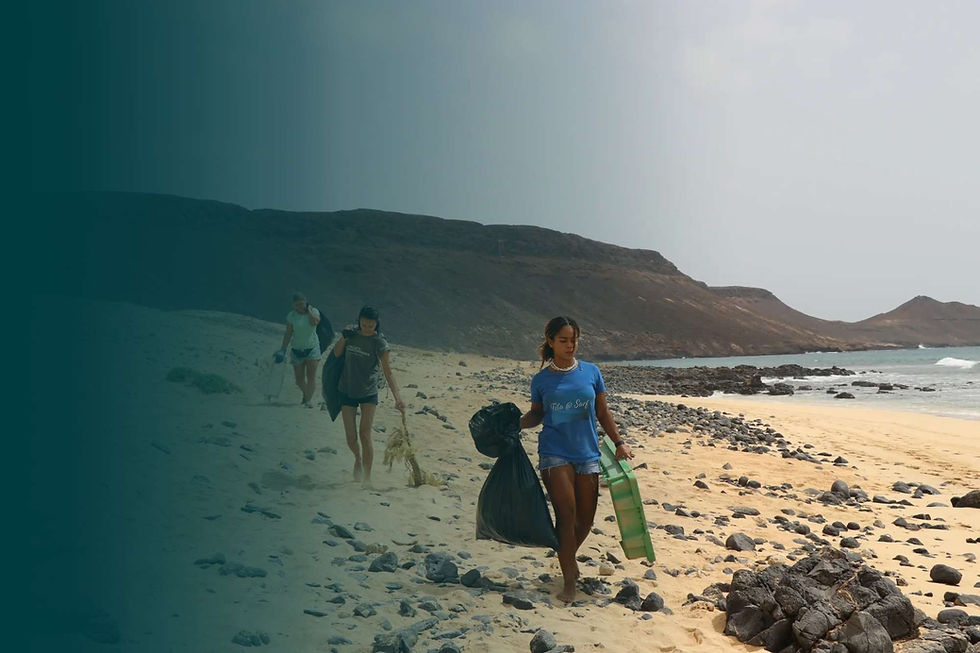
Project Biodiversity, together with other local non-governmental organisations and the national environmental directive, drives conservation initiatives that protect species and habitats while supporting the livelihoods of coastal communities. Our work recognises that ecological health and human wellbeing are deeply interconnected.
Sustainable fishing and tourism practices are promoted to safeguard marine resources without compromising food security and economic stability. Through environmental outreach and education campaigns, these initiatives engage both residents and visitors, inspiring actions that help curb pollution, poaching, and habitat loss.
Protecting Cabo Verde’s Wildlife Together
Cabo Verde’s wildlife is a remarkable expression of nature’s resilience and diversity. Its terrestrial and marine biodiversity represent ecosystems that are both fragile and invaluable.
Sustainable practices, combined with dedicated conservation work and volunteer involvement, are essential to preserve this biodiversity for future generations.

Whether you are a passionate wildlife enthusiast or a casual nature admirer, the extraordinary biodiversity of Cabo Verde will captivate your heart. When you visit, choose to support responsible tourism and volunteer with conservation organisations such as ours. Your participation helps ensure these islands remain wild, vibrant, and teeming with life.

Volunteer
Whether you are a passionate wildlife enthusiast or a casual nature admirer, the extraordinary biodiversity of Cabo Verde will captivate your heart. When you visit, choose to support responsible tourism and volunteer with conservation organisations such as ours. Your participation helps ensure these islands remain wild, vibrant, and teeming with life.